Scar Revision
Conveniently located to serve the areas of Avon and Hartford, CT
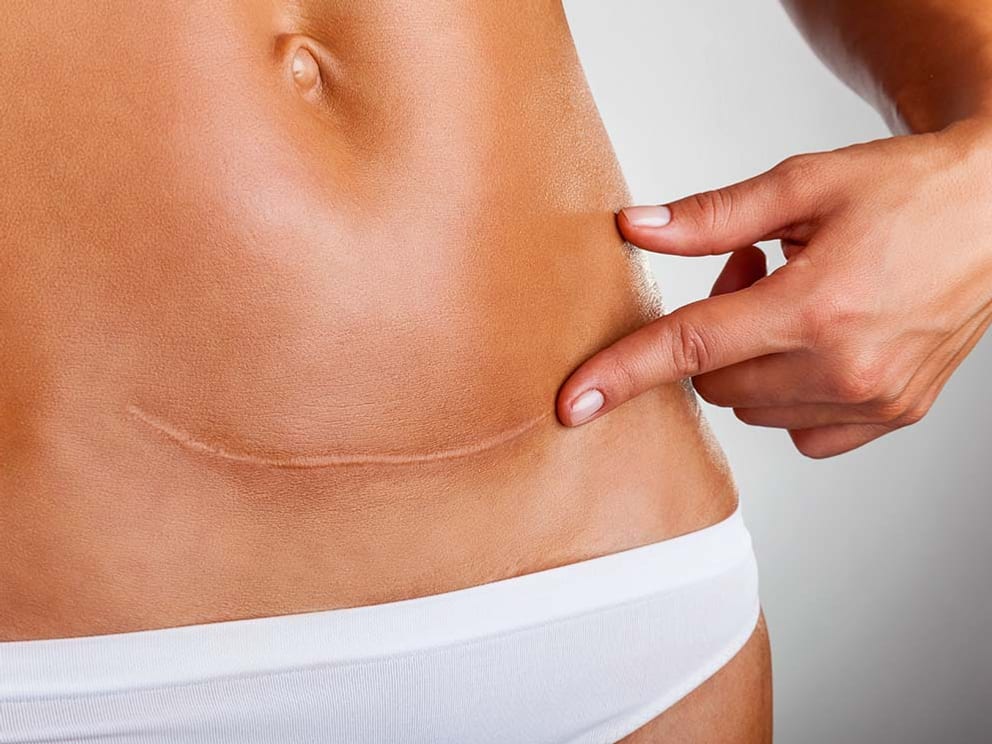
Scar revision is a procedure designed to improve the appearance of an existing scar, helping it blend more naturally with the surrounding skin. (1) If you have a scar that causes discomfort or makes you feel self-conscious, scar revision may be an effective solution.
Dr. Paul Stanislaw, Jr. of the Stanislaw Facial Plastic Surgery Center in Hartford can help determine if a scar revision is right for you. Board-certified in Facial Plastic and Reconstructive Surgery and Otolaryngology–Head and Neck Surgery, Dr. Stanislaw is known for his surgical excellence and compassionate care, helping patients achieve their aesthetic goals with results that complement their unique features.
To learn more about scar revision, call (860) 409-1515 or contact us online to schedule your consultation with Dr. Stanislaw.
Contents
About Scar Revision
Whether from a childhood injury, acne, or a previous procedure, scars are a familiar part of life. They form as the body repairs damaged skin with fibrous scar tissue. While many scars fade significantly over time, others remain raised, sunken, or tight enough to restrict movement. Scar revision can help improve a scar’s appearance and, when needed, relieve tightness caused by excess scar tissue. Treatment will be influenced by scar type, whether it is sunken or raised, its texture, and its color, whether that is hypopigmented (white), hyperpigmented (darkened), or erythematous (red).
Types of Facial Scars
Scar revision addresses several major scar types, each requiring a slightly different treatment approach. Some common types of scars include: (2)
- Hypertrophic Scars: Thick, raised, firm, and colored with a purple or red hue. These scars stay within the boundaries of the original cut or injury and may flatten over time. They may feel tender or itchy and occur when the body overproduces collagen while healing.
- Keloid Scars: Aggressive, overgrown scar tissue that spreads beyond the original injury margins. They do not regress on their own and have a high rate of recurrence after medical removal.
- Atrophic Scars: Depressed, sunken areas of the skin commonly caused by inflammatory conditions like acute acne. They form when the body does not produce enough collagen during healing.
- Contracture Scars: Tight, constricting bands of scar tissue that often develop after extensive burn injuries. By pulling the surrounding skin edges together, they can significantly reduce skin elasticity and restrict movement around joints and muscles.
- Widened Scar: A stretched, flat line of skin that grows wider than the original cut or injury, usually caused by skin tension or early strain during healing.
How Scar Revision Can Improve an Existing Scar
It may seem counterintuitive to address a problematic scar by creating a new scar, but a carefully planned revision can help the new scar blend more naturally with the surrounding skin. Any procedure will produce a scar, but scar revision is about resetting the elevation, angle, and joint of the two tissues to create a flush, smooth, and clean appearance. Removing existing scar tissue creates a new incision site, allowing Dr. Stanislaw to reposition and align the skin edges precisely. This reduces tension across the scar edges, helping limit widening as the incision heals. However, scar revision does not always mean removing the scar entirely. Some treatments can improve its thickness, color, or texture without excision.
Benefits
A scar revision performed by Dr. Stanislaw offers numerous benefits, such as:
- Improved Appearance: Reduces a scar’s size, depth, thickness, and distinct redness or hyperpigmentation so that it blends more naturally with your surrounding skin
- Restored Mobility: Relieves tight scar tissue that restricts movement around joints or facial features.
- Reduces Discomfort: Relieves chronic itching, tenderness, and pain associated with hypertrophic scars or keloids.
- Boosted Confidence: Reducing the visibility of prominent scars, especially on the face or neck, helps patients feel more comfortable in their skin and like their best self again.
Ideal Candidates
Scar revision is ideal for individuals who want to improve the appearance or function of an irregular scar. Candidates should have fully mature scars, typically six months to two years old. Additionally, candidates should be in good overall health and free from active skin conditions or acne breakouts in the targeted treatment area. Maintaining realistic expectations regarding potential surgical and cosmetic outcomes is essential to achieving favorable results.
Personal Consultation
Before scheduling their scar revision, patients must meet with Dr. Stanislaw for a personal consultation. During this initial appointment, he will review your medical history, and together, you will discuss the scar’s cause, your symptoms, any previous treatments, and any concerns you may have. He will then perform a comprehensive physical examination of your scar, assessing its size, color, texture, flexibility, and whether it is fully matured. Based on this assessment, Dr. Stanislaw will create a personalized treatment plan tailored to your health profile. He will guide you through all suitable options, outlining what to expect regarding the procedure, preparation, recovery timeframe, potential risks, pricing, and more.
To schedule a consultation with Dr. Stanislaw, please call (860) 409-1515 or contact us online.
Procedure
The scar revision procedure is performed under local anesthesia and typically takes 30 minutes to 2 hours, depending on the size and complexity of the scar. Because scar revision is tailored to each patient, the specific technique chosen depends on the scar’s location, orientation, and whether it pulls on surrounding tissues. Dr. Stanislaw performs these approaches individually or combined:
Scar Excision and Direct Closure
Dr. Stanislaw begins by making an incision around the area and completely removing the old scar tissue. To minimize tension on the new incision, he carefully separates the skin edges from the underlying tissues before placing deep internal sutures for structural support. He then completes the closure using fine surface sutures. By slightly everting (raising) the skin edges during placement, he ensures optimal alignment and allows the wound to heal smooth and flat as it settles. This approach suits scars that are widened or depressed when the surrounding skin allows tension-free closure.
Z-Plasty
Dr. Stanislaw makes a Z- shaped incision over opposing sides of the existing scar. This geometric rearrangement lengthens the tissue to relieve painful skin tightness and rotates the scar so it blends smoothly into the body’s natural wrinkle lines. This is useful for improving scars that restrict movement, pull on nearby facial features, or run unfavorably across natural skin lines. (1)
W-Plasty
Dr. Stanislaw removes the scar with a series of small, interlocking triangular zigzag incisions and brings the opposing skin edges together. Unlike Z-plasty, this configuration lets the scar blend into natural skin folds and redistributes tension, making it particularly effective for facial scars on the cheeks, chin, and forehead. (1)
Nonsurgical Scar Treatments
Depending on the scar’s complexity, individuals may benefit from silicone products or corticosteroid injections to flatten raised tissue or laser treatments to improve redness, discoloration, and texture. Another effective option is microneedling, which uses tiny needles to create controlled micro-injuries in the skin. This process stimulates collagen production and helps reduce the appearance of depressed or uneven scars over time. Additionally, intense pulsed light (IPL) therapy uses targeted light energy to address the redness and discoloration of certain scars, helping create a more even skin tone. Finally, in cases of sunken scars, Dr. Stanislaw may add hyaluronic acid (HA) fillers to raise them to an even surface. These nonsurgical treatments may be performed on their own or in combination with another procedure to enhance outcomes. (1)
Recovery and Results
Recovery varies and depends on the extent of the revision, its location, and how the patient heals. During the initial recovery phase, you may experience localized swelling, discoloration, soreness, and other mild discomfort. You can manage minimal discomfort with tylenol or motrin. Initial healing may take one to two weeks, but some symptoms can last longer. (3)
Based on the incision location and healing progress, Dr. Stanislaw typically removes non-dissolvable superficial sutures within 5 to 14 days after the procedure during a follow-up appointment. Following Dr. Stanislaw’s specific instructions for gently washing the incision, applying designated ointments, and replacing dressings is crucial for proper healing. Until cleared, patients must avoid strenuous physical activity and straining the incision.
Additionally, patients must shield the healing incision from sun exposure and, once healed, apply a micronized zinc oxide based sunblock to help minimize long-term discoloration. (2) When medically appropriate, patients can use silicone gel or sheets after the incision has fully closed to help flatten and soften the healing tissue.
By weeks two to six, localized swelling should decrease, but the scar may temporarily appear pink or slightly raised as the new tissue is still forming. Over the following months, as the skin undergoes collagen remodeling, the scar may slowly flatten, soften, and fade. The scar can continue maturing for 12 to 18 months or longer. (2)
Cost of Scar Revision in Hartford, Connecticut
The total cost of scar revision depends on several factors, such as the type of treatment, the scar’s size, location, complexity, and other cost variables. After establishing your treatment plan, Dr. Stanislaw will provide a comprehensive price estimate for your procedure.
To learn more about the cost of your scar revision, please call (860) 409-1515 or schedule a consultation online.
FAQ
Can an old scar improve on its own?
An old scar rarely improves significantly on its own once it matures, typically after 12 to 18 months. Without intervention, old scars respond to external factors, such as darkening from sun exposure or slight softening from natural skin hydration.
Is scar revision recovery painful or difficult?
Scar revision recovery is generally manageable, with most patients experiencing only mild soreness rather than intense pain. While non-surgical treatments may let you return to daily activities immediately, surgical revisions typically require one to two weeks of downtime for the outer skin to heal and the stitches to be removed. Although you can resume your daily routines fairly quickly, full healing, softening, and fading take several months to a year. Carefully following Dr. Stanislaw’s postoperative instructions will help you achieve optimal long-lasting results.
Will I need multiple scar revision treatments?
Depending on the type, depth, and severity of your scar, you may require multiple treatments for scar revision. Minor irregularities or simple excisions can be corrected in one visit; however, non-surgical methods typically require multiple appointments to fully correct scar irregularities.
References
- Scholar RV S. Surgical Scar Revision: An Overview. JCAS. November 30, 2013. Accessed September 15, 2026. https://jcasonline.com/surgical-scar-revision-an-overview/
- Commander S, Chamata E, Cox J, Dickey R, Lee E. Update on Postsurgical Scar Management. Seminars in Plastic Surgery. 2016;30(03):122-128. doi:10.1055/s-0036-1584824
- 2026 American Society of Plastic Surgeons. American Society of Plastic Surgeons. American Society of Plastic Surgeons. 2026. Accessed September 15, 2026. https://www.plasticsurgery.org/reconstructive-procedures/scar-revision/recovery