
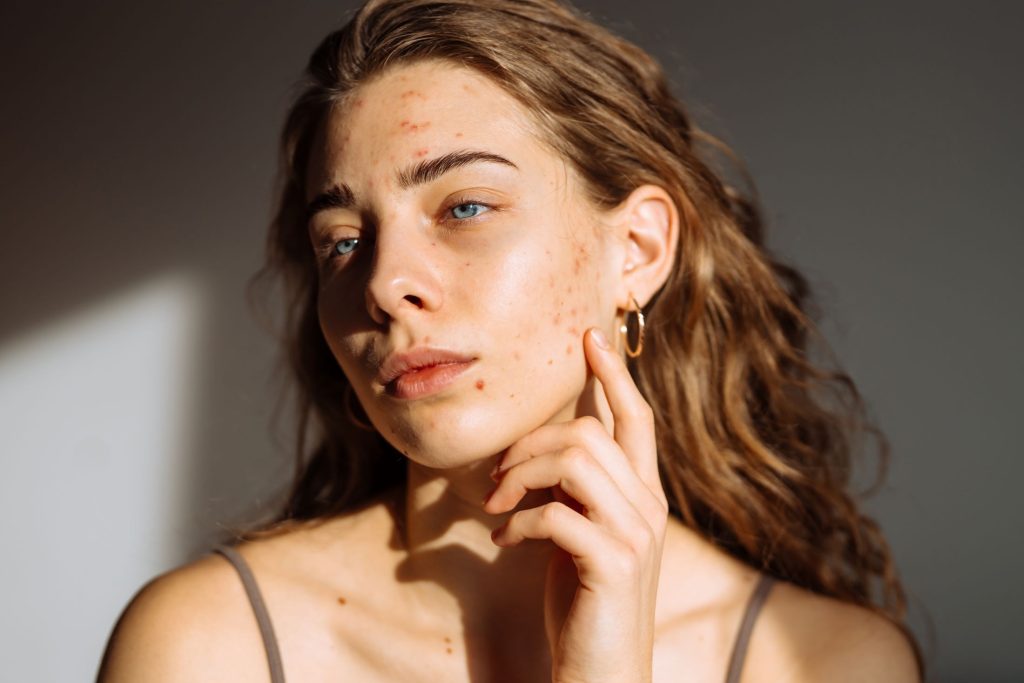
Acne scars are more common than you might think. About one in five people who have acne will have scarring. But is there anything you can do about these annoying blemishes? Absolutely! There are lots of different treatments to reduce the appearance of or completely eliminate acne scars. And with that in mind, let’s take a closer look at acne scars and the treatments we offer at Stanislaw Facial Plastic Surgery Center.
Contents
What Causes Acne Scars?
Acne scars are caused by the inflammation of acne. When the pore where the acne is swells and breaks down, this creates a shallow scar. When the contents of the acne spill to the surrounding tissue, a deep scar can form. The scar is the skin’s natural response to a wound and occurs when collagen fibers are created to cover the damage.
An acne scar can take two different forms. The first is when a scar develops because there is a loss of tissue. The scar makes up for this loss of tissue and makes an indentation in the skin. The second is when a scar is raised on the surface of the skin and occurs when too much collagen is produced to cover the wound.
That said, not everyone who has acne develops acne scars. You are more likely to develop acne scars if the acne went deep into the skin, if you picked, popped, or squeezed the acne, or if you have a family history of acne scars.
Types of Acne Scars
There are two main types of acne scars: atrophic and hypertrophic.
- Atrophic scars: These types of acne scars are indented into the skin (depressed acne scars). They are often the result of severe or persistent acne. There are generally three types of atrophic acne scars, including:
- Ice Pick Scars: Resemble an ice pick with a wide top and a narrow or pointy bottom that goes deep into the skin.
- Rolling Scars: Found in the lower cheeks and jaw, and include indents that give an uneven or wavy appearance to the skin.
- Boxcar Scars: Have sharp edges and go deep down into the skin; they are often found in the jaw and lower cheeks
- Hypertrophic scars: Hypertrophic scar tissue rises above the skin (raised acne scars) and is often caused when collagen overgrows. These types of scars can be located on the chest, back, shoulder, and jawline.
Professional Treatment Options for Acne Scars
At Stanislaw Facial Plastic Surgery Center, we offer a wide range of professional treatments to help reduce or completely erase acne scars from the skin. The effective treatments we offer include:
Chemical Peels
A chemical peel uses a chemical solution to remove the damaged outer layers of the skin. By using our medium or deep peel, we can directly target the acne scars and give you the smoother, more even complexion you’re looking for.
Collagen Induction Therapy
Collagen induction therapy (also known as microneedling) uses thin needles to make tiny punctures into the skin. This process stimulates the skin’s natural healing process and boosts collagen production, allowing the damage to heal properly and leaving you with smoother skin.
Dermal Fillers
Struggling with atrophic or indented acne scars? Injectable fillers can fill in the indentation and give you a smoother appearance to your skin. You will see results immediately, and those results can last for up to two years.
Pulsed Dye Laser Treatments
At our office, we use the V-beam Pulsed Dye Laser. This treatment works by emitting light through the skin. The light is then absorbed by blood vessels in the treatment area. The absorbed energy is then converted to heat, which injures the area and improves redness and the appearance of acne scars over time.
Laser Resurfacing
The Erbium YAG laser system uses laser light energy to address a variety of skin concerns, including acne scars. The laser energy is absorbed by the deep layers of the skin. The energy is then converted to heat, stimulating collagen production and leaving you with smoother skin. How many treatments you need will depend on the extent of your scars and the results you’re looking for.
Surgical Excision
Some acne scars are too extensive for a non-surgical treatment. When that’s the case, surgical excision is typically the next step. Dr. Stanislaw will surgically remove the acne scar from the skin and give you detailed instructions on how best to take care of your skin so any surgical scars are as invisible as possible.
At-Home Care and Maintenance to Treat Acne Scars
There are a variety of skincare products and treatments sold over the counter that can help reduce the appearance of acne scars, but they likely won’t completely remove them. At our office, we also offer medical-grade products that can give you more significant results. Some ingredients to look out for include alpha hydroxy acids (AHAs), lactic acid, salicylic acid, and retinoids. Dr. Stanislaw and his team will help you discover the products that are right for your skin type.
When to Seek Treatment
There is no right or wrong time to seek treatment for acne scars. If you are struggling with acne scars (new or old), schedule a consultation today. During your consultation, we’ll examine your skin, discuss your concerns, and build a customized treatment plan for you. We’ll ensure you can achieve the results you’re looking for.
Schedule a Consultation
Tired of seeing acne scars when you look in the mirror? Not seeing results from over-the-counter products? Schedule a consultation with our team today. Call our Avon, CT office or message us via our online contact form.